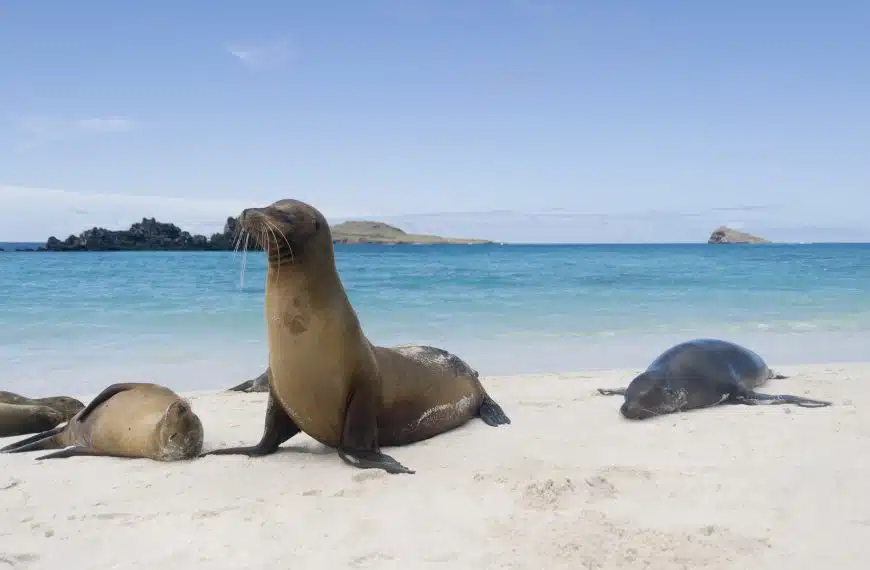
Here's the moment parents tell us about more than any other: their child surfaces from their first Galapagos snorkel, rips the mask off, and says something like "A SEA LION LOOKED AT ME." That moment — the sheer disbelief that a wild animal just swam up and made eye contact — is what makes Galapagos snorkeling different from anywhere else on Earth.
But before that moment happens, parents have questions. Lots of them. Is snorkeling safe for children here? What if my kid isn't a strong swimmer? What equipment do they need? Will the water be too cold?
We hear these questions every week, and they're exactly the right ones to ask. Snorkeling in the Galapagos is genuinely extraordinary, but it's also different from snorkeling at a resort in the Caribbean. The water is cooler, the currents are real, and there's no roped-off shallow area. Here's everything you need to know.
Yes — with the right preparation and realistic expectations about your child's ability.
Every snorkeling session on a Galapagos cruise is led by a certified naturalist guide who has been trained in water safety. The guide assesses conditions at each site before anyone enters the water, chooses entry and exit points, and stays with the group throughout. If conditions at a particular site are too rough, the guide will modify the plan — sometimes moving to a more sheltered area, sometimes switching to a Zodiac ride along the coast instead.
Crew members from the vessel typically join snorkeling sessions to provide additional supervision. The guide-to-swimmer ratio is far better than anything you'd find on a beach resort snorkeling excursion.
What makes it different from resort snorkeling is the open-water environment. There are currents, the depth varies, and you're swimming in the ocean rather than a lagoon. That's precisely why the wildlife encounters are so remarkable — but it also means children need to be genuinely comfortable in the water, not just willing to try.
There's no universal age rule for snorkeling in the Galapagos, but here's what we've learned from years of guiding families:
Most cruises accept children from age 6, but snorkeling readiness varies enormously at this age. The key question isn't "can they swim?" — it's "can they swim confidently in water where they can't touch the bottom, with a mask on their face, for 20-30 minutes?" Some six-year-olds are completely comfortable. Others aren't, and that's perfectly fine.
At this age, we recommend parents do at least one trial run in a pool before the trip. Put the mask on, practice breathing through the snorkel, and swim a few lengths without touching the bottom. If your child is relaxed and enjoying it, they'll be fine in the Galapagos. If they're anxious, don't push it — the land-based wildlife encounters are just as extraordinary.
This is the age range where most children start to really enjoy Galapagos snorkeling. They're strong enough to handle a wetsuit, coordinated enough to clear a snorkel, and excited enough by the wildlife to stay focused in the water. Many children in this range snorkel every session offered on the cruise and ask for more.
Older children and teenagers tend to be fully independent snorkellers. They'll swim further, stay out longer, and often end up at the front of the group, trying to keep up with a sea turtle or follow a ray gliding over the sand. This is the age where Galapagos snorkeling becomes genuinely life-changing — the kind of experience that shapes how a young person sees the natural world.

Every Galapagos cruise provides masks, snorkels, fins, and wetsuits as part of the trip. You don't need to bring your own, and the equipment is included in the cruise price.
However — and this is important for families — the equipment provided is sized for adults. Most vessels carry a range of sizes, but children's equipment can be limited, particularly masks and fins for smaller faces and feet.
Fins are less critical to bring — most vessels have a reasonable range of sizes, and children's feet grow so fast that buying fins specifically for one trip may not make sense. But if your child has particularly small feet (younger than 8), check with us and we'll confirm what sizes your vessel carries.
Not all Galapagos snorkeling sites are equal. Some are sheltered, shallow, and teeming with friendly wildlife — perfect for first-timers. Others involve current, depth, and cold upwellings that are better suited to experienced swimmers. Your naturalist guide will always assess conditions, but these are the sites we recommend when families ask us which itineraries offer the gentlest introduction to Galapagos snorkeling.
For detailed site information, see our blog post on the best places for snorkeling in the Galapagos.

A sheltered lagoon connected to the ocean by a narrow channel. The water is calm, shallow, and warm by Galapagos standards. Sea lions, marine iguanas, and sea turtles are regular visitors. This is as close to "pool conditions" as you'll find in the Galapagos, and it's an ideal first snorkel for nervous children.
This sounds dramatic — two towering rock formations rising from the ocean — and the snorkeling can be, too. But the sheltered side of Kicker Rock offers calmer water where families can snorkel along the rock wall and spot reef sharks, turtles, and rays in the blue water below. Best for children who are already comfortable snorkellers, typically age 10+.
A volcanic beach with relatively calm water and excellent visibility. Galapagos penguins are regularly spotted here — snorkeling alongside a penguin is a highlight that children never forget. The sandy bottom is visible throughout, which helps less confident swimmers feel secure.
A white-sand beach with a gentle entry into clear water. Sea lion pups are often playing in the shallows, and they'll swim right up to children's masks with fearless curiosity. The current is usually mild here, making it suitable for younger snorkellers.
A submerged volcanic crater that creates a natural ring of protected water. The inside is sheltered and rich with marine life — sea stars, reef fish, and rays on the sandy bottom. The outside of the crater has stronger currents and is better for experienced swimmers. Guides will direct younger snorkellers to the calmer interior.
This is the part that turns reluctant children into enthusiastic ones. The Galapagos delivers marine encounters that simply don't happen anywhere else, because the animals here have no instinctive fear of humans.
Not every child takes to snorkeling immediately, and that's completely normal. Here's what works, based on our experience with hundreds of family groups:

This catches many families off guard. The Galapagos sits on the equator, but the ocean can be genuinely cold — particularly during the cool season (June to November) when water temperatures drop to 18-20°C. Even during the warm season, 24°C feels cold after 30 minutes of swimming.
Wetsuits are provided on all cruises, and we strongly recommend children wear them for every snorkeling session, regardless of the month. The wetsuit does three things: it keeps them warm, it provides buoyancy (making it easier to float), and it protects their skin from the sun and minor scrapes.
Practical tip: Help your child practice putting on a wetsuit before the trip if possible. They're awkward to get into, and struggling with one on a moving boat while other passengers are ready to go can make an already nervous child more anxious. If you can hire or borrow a wetsuit for a pool session, it's worth the effort.
During the cool season, some families bring a thin neoprene hood for their children. It's not essential, but children lose a lot of heat through their heads, and a hood can extend comfortable snorkeling time significantly.
Here's the honest truth: some children aren't ready to snorkel, and that's absolutely fine. The Galapagos is one of the very few places on Earth where the land-based wildlife experiences are just as extraordinary as the underwater ones.
While the rest of the group snorkels, children who stay on the beach or the Zodiac will still see:
On most cruise itineraries, every snorkeling session is paired with a land excursion at the same site or nearby. Non-swimming children aren't left out — they're simply experiencing a different, equally remarkable side of the islands.
For families where none of the children are ready to snorkel, a land-based island-hopping itinerary might be the better option. You'll still visit the same islands and see the same wildlife on land — you just won't be sleeping on a boat.
Every family is different, and the right snorkeling experience depends on your children's ages, abilities, and confidence. Tell us about your family and we'll recommend a vessel, itinerary, and approach that matches — whether that's a gentle warm-season cruise with sheltered snorkeling sites or an adventurous cool-season expedition for your teenage fish.
Talk with an expert insider — we'll give you the honest picture, not the sales pitch.