

This is one of the most common questions we hear from parents planning a Galapagos trip: "My children can't really swim yet — is there any point in going?"
The answer is a firm yes. And not a compromised, watered-down yes. A genuine, full-experience yes.
The Galapagos is not a destination that requires strong swimming to enjoy. Some of the most extraordinary wildlife encounters happen on dry land, in ankle-deep water, or from the deck of a boat. And for families who do want their children to experience the underwater world, there are real options — calm-water sites, shallow beach encounters, glass-bottom boats, and land-based tours that let you choose your comfort level every single day.
We've helped families with toddlers, anxious swimmers, children with disabilities, and adults who've never put their face in water all have remarkable Galapagos experiences. Here's how.
Let's be clear about something: snorkeling is one part of a Galapagos trip, not the whole trip. Every itinerary — whether cruise-based or land-based — includes multiple dry landings on islands where the wildlife is right there in front of you, on land, at eye level. Blue-footed boobies dance a meter from your feet. Marine iguanas bask on rocks you're walking past. Giant tortoises lumber across your path in the highlands.
None of this requires swimming. Not a stroke.
That said, the underwater world in the Galapagos is genuinely special — sea lions spiralling around you, sea turtles gliding past, penguins zipping through the water like tiny torpedoes. We understand why parents feel their children might miss out if they can't snorkel. The good news is that there are multiple ways to bring non-swimmers closer to this underwater world without ever being out of their depth.
This is one of the most important things we tell families with non-swimmers: land-based tours offer sites with more calm waters and more flexibility than cruise itineraries.
Here's why. A cruise follows a fixed route set by the Galapagos National Park. If the itinerary says you're snorkeling at a particular site that day, that's where you go — even if conditions are choppy or currents are strong. You can always choose to stay on the boat, but you can't redirect the whole vessel to a calmer spot.
A land-based tour operates differently. You're staying on one of the inhabited islands (usually Santa Cruz, San Cristobal, or Isabela), and your day trips can be adjusted based on conditions, your family's comfort level, and what's working for your children. If the morning snorkel site looks too rough, your guide can pivot to a beach walk, a kayak outing, or a different cove. That flexibility is invaluable for families with non-swimmers or anxious children.

We particularly recommend two options for families in this situation:
Our own hotel-based package is designed with exactly this kind of flexibility in mind. You stay in comfortable accommodation on the inhabited islands and take day trips to visitor sites with a naturalist guide. Snorkeling is always available but never mandatory — and the sites selected tend to have calmer, shallower water than many cruise snorkel stops. This is an excellent option for families who want the full Galapagos experience while keeping water activities within everyone's comfort zone.
This package covers the highlights of multiple islands while keeping the pace family-friendly. Because it's land-based, you have the same flexibility advantage — the ability to adjust water activities day by day. It's also a more affordable entry point for families who aren't sure how much snorkeling they'll actually want to do.
For children who genuinely don't want to enter the water — or who are too young to snorkel safely — glass-bottom boat rides and panga (zodiac) tours offer a surprisingly good alternative.
Glass-bottom boats let the whole family see the underwater world without getting wet at all. Children can watch sea turtles, rays, and fish through the viewing panels, often from very close range. It's not as immersive as snorkeling, but for a four-year-old who would otherwise be sitting on the beach, it's transformative.
Panga rides along the coastline are another highlight. Your zodiac driver navigates slowly along cliffs, mangroves, and rocky shorelines where penguins perch, sea lions haul out, and marine iguanas feed on exposed algae. The water is often crystal clear, and children can lean over the side and see fish, rays, and even sharks in shallow water. Some of the best wildlife moments happen from the panga, not in the water.
Some of the most magical Galapagos experiences for non-swimming children happen in water that's barely knee-deep. Several visitor sites have sandy beaches with calm, sheltered water where wildlife comes to you.
None of these experiences require entering deep water. A child who never puts on a snorkel mask will still have incredible close-up wildlife encounters in the Galapagos.
For families where children are nervous rather than unable — they can swim a little, but open water feels scary — the Galapagos can actually be a wonderful place to build confidence. The key is a gradual approach, and the right site selection.
Start with time on sheltered beaches. Let children get comfortable in warm, calm water without any pressure to snorkel. The Galapagos water temperature ranges from about 20-26°C depending on season and location — warm enough to be comfortable, cool enough that a shorty wetsuit helps.
Once children are relaxed in the water, try the mask and snorkel in knee-deep areas. Let them practice breathing through the snorkel while standing up. There's no rush. Some children take to it in five minutes. Others need a full day of gradual exposure.
When they're ready, your naturalist guide can take them into slightly deeper water while staying close to shore. All guides carry flotation aids, and children should always wear a life jacket or flotation vest during their first open-water snorkels. The guide stays within arm's reach at all times.
By mid-trip, many children who started as non-swimmers are confidently snorkeling in calm bays, watching sea turtles and fish below them. We've seen this progression happen dozens of times — the Galapagos has a way of making children want to be in the water because that's where the sea lions are.
For more detailed snorkeling tips and age-appropriate guidance, see our complete guide to snorkeling in the Galapagos with kids.
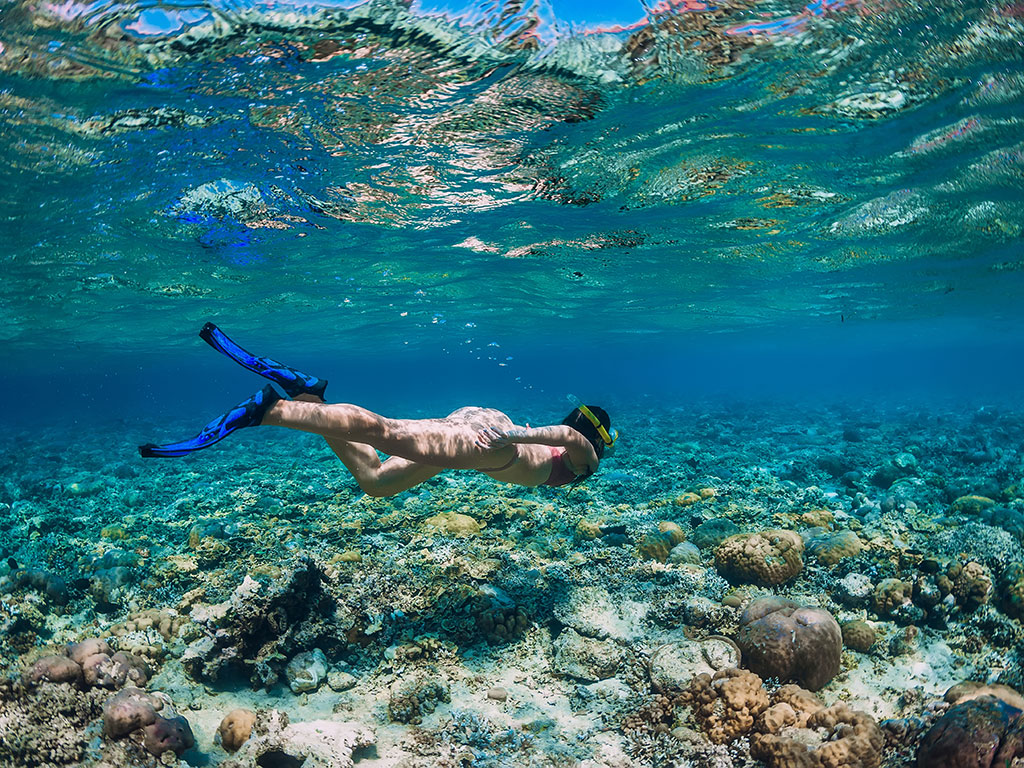
Most Galapagos cruise ships and land-based tour operators provide basic snorkeling equipment (mask, snorkel, fins). However, for non-swimmers and beginners, we recommend bringing or requesting a few additional items:
Water conditions in the Galapagos vary significantly between sites. Some snorkel spots have strong currents that challenge even confident swimmers. Others are sheltered bays with water so calm it feels like a swimming pool. For non-swimmers, site selection matters enormously.
Generally, the calmest snorkeling conditions are found at:
Sites to avoid with non-swimmers include Devil's Crown (strong currents), Punta Vicente Roca (cold, deep water with currents), and any site where the panga briefing mentions "drift snorkeling" — that means the current moves you, which is wonderful for strong swimmers but terrifying for beginners.
For more on accessible sites and safety considerations for families, see our dedicated guides.
There is absolutely no shame in skipping a snorkeling session. On every cruise and every land-based tour, snorkeling is optional. Nobody will judge your family for staying dry. And the alternatives are genuinely excellent:
The Galapagos is extraordinary above water and below it. A family that never snorkels will still have one of the most remarkable wildlife experiences on the planet.
We specialize in matching families to the right experience — whether that's a land-based tour with calm-water sites, a cruise with excellent beach landings, or a custom itinerary that balances everyone's comfort levels. Tell us about your family and we'll design a trip where every member thrives, swimmers and non-swimmers alike.



