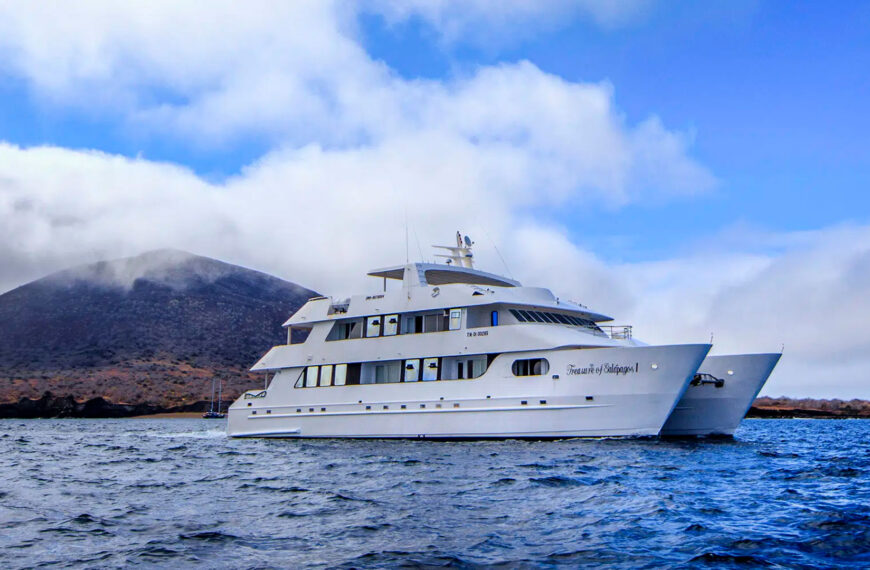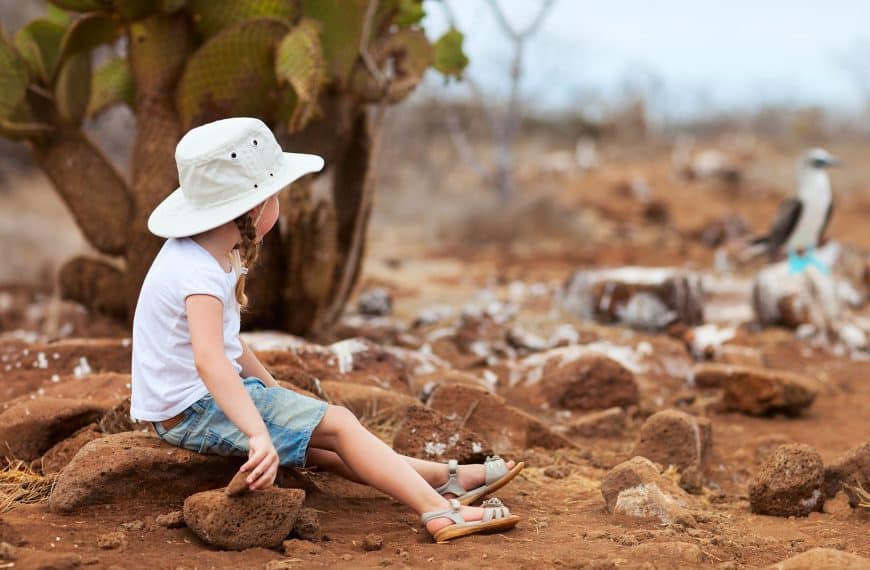
If you've been searching for a Galapagos cruise with a kids program, you've probably noticed the information is a bit thin on the ground. That's because a "kids program" in the Galapagos doesn't look anything like the rainbow-colored drop-off clubs you'll find on mainstream cruise ships. And honestly? We think what the Galapagos offers is far better.
As local experts based in Ecuador, we've helped hundreds of families choose the right vessel for their children. In this guide, we'll explain exactly what a Galapagos kids program involves, which vessels do it best, and how to set your family's expectations so everyone — parents included — has the trip of a lifetime.
Let's start with what it's not. There is no ball pit. There is no face painting. There are no costumed characters or arcade rooms. Galapagos expedition vessels carry between 16 and 100 passengers, and they simply don't have the space or the concept of a dedicated children's facility.
What they do have is something we think is far more valuable: naturalist guides who know how to engage children.
Every Galapagos cruise carries certified naturalist guides — trained biologists, marine scientists, and wildlife experts licensed by the Galapagos National Park. On vessels with a kids program, one or more of these guides has specific experience working with younger travelers. They adjust their language, shorten explanations, build in games and activities, and turn every shore excursion into an interactive adventure rather than a lecture.
Think of it as private tutoring from a wildlife expert, not a babysitting service. Your children aren't separated from you for hours — they're alongside you, but with a guide who's speaking directly to their level of curiosity and attention span.
The best Galapagos guides are natural storytellers, and children are often their most enthusiastic audience. Here's what adaptation looks like in practice:
Rather than explaining Darwinian evolution in academic terms, a good guide will ask a group of eight-year-olds why they think that finch's beak is shaped differently. They'll turn it into a detective game. Children end up understanding natural selection without ever hearing the term — and they remember it far longer than most adults who sat through the textbook version.

Several vessels provide children with wildlife journals or species checklists. Kids tick off each animal they spot — blue-footed boobies, marine iguanas, Galapagos penguins — and the guide helps them sketch or photograph their favorites. By the end of the trip, they've built their own nature field guide.
Adult excursions typically run 2–3 hours. Guides working with younger children build in more frequent breaks, allow time for play on sandy beaches after the educational component, and know when to let kids simply watch a sea lion colony rather than pushing through to the next waypoint.
For children who are comfortable in the water, guides provide gentle snorkeling coaching — adjusting masks, staying close, and pointing out marine life in real time. Some vessels also carry child-sized wetsuits and snorkeling gear, though we always recommend checking this when you book.
It's worth noting that guides in the Galapagos are freelance professionals — we can't guarantee a specific guide on a specific sailing. But vessels with structured kids programs consistently assign guides with child-engagement experience to families.
Not every Galapagos cruise advertises a kids program, and among those that do, the depth of programming varies. Based on our years of working with these vessels and the feedback from families we've sent, here are our top recommendations.
The Infinity stands out for its dedicated children's naturalist activities. The vessel actively markets itself as family-friendly and puts genuine effort behind that claim. Children get structured activity time with a guide during select portions of the itinerary, while parents can enjoy the adult-paced excursion. It's the closest thing to a formal kids program you'll find in the Galapagos.
The Hermes is a smaller, more intimate vessel that works beautifully for families. The low passenger count means guides can give children more individual attention, and the crew is known for going out of their way to make young travelers feel welcome. Children's programming here is less formal and more organic — the guide naturally adjusts to whoever is in the group.
The Sea Star combines solid family infrastructure with a comfortable mid-range experience. The vessel carries child-appropriate activity materials and the guides are experienced with mixed-age groups. It's a popular choice for families who want a well-rounded trip without the premium price tag of luxury vessels.

One of the most common questions we hear is: "Will my child actually enjoy this?" Here's how the experience typically breaks down by age group. For a deeper dive into traveling with younger children, see our guide to the Galapagos with young children.
At this age, everything is magical. Children in this bracket are usually captivated by the sheer closeness of the animals — a sea lion pup sleeping on the trail, a marine iguana sneezing salt, a blue-footed booby doing its mating dance two meters away. Guides focus on sensory engagement: touching lava rocks, listening for bird calls, watching crabs change color.
This is the sweet spot for the Galapagos. Children are old enough to understand basic ecology, strong enough for longer hikes, and curious enough to ask questions that genuinely challenge the guides. They often become the most engaged members of the group.
Teens typically don't need — or want — a kids program. They join the adult excursions and often thrive with the physical challenges: deep-water snorkeling, longer hikes over lava fields, and kayaking. For more on this age group, see our guide to the Galapagos with teenagers.
To give you a real feel for how the day flows, here's what a typical day might look like for a family with children ages 7 and 10:
6:30 AM — Early risers on deck. The guides often spot dolphins or seabirds before breakfast. Kids in pyjamas with binoculars is a common Galapagos sight.
7:00 AM — Breakfast. All Galapagos cruises accommodate dietary requirements — just let us know when you book. Fresh tropical fruit is always a hit with younger travelers.
8:00 AM — Morning excursion. A wet landing on a sandy beach, followed by a guided walk. The naturalist leading the children's group stops more frequently, encourages questions, and points out things at a child's eye level — hermit crabs, lava lizards, and cactus finches. The walk is shorter than the adult route, ending at a beach where kids can play while parents catch up.
10:30 AM — Snorkeling. The guide fits masks and helps nervous first-timers. Even children who start cautiously are usually swimming confidently within minutes once they spot a sea turtle gliding beneath them.
12:30 PM — Lunch and rest. Most vessels sail to the next visitor site during the early afternoon. This is nap time for younger ones and reading or journal time for older children. Around 90% of Galapagos cruises now have Starlink Wi-Fi, so older kids can message friends back home — though we'd encourage putting the phone away.
3:00 PM — Afternoon excursion. Perhaps a dry landing at a rocky site with nesting birds. The guide brings a magnifying glass for examining rock formations and insect life. Children fill in their activity journals.
5:30 PM — Sundeck time. Watching the sunset over the Pacific while the guide shares stories about the islands' volcanic origins. Children often ask if they can sleep on deck (the answer, unfortunately, is no).
7:00 PM — Dinner and briefing. The guide previews tomorrow's itinerary. Children who've been keeping activity journals often share their favorite sighting of the day. Then it's early to bed — sea air and sunshine have a way of exhausting even the most energetic kids.

We believe in being upfront, so here are a few practical realities that matter for families:
We know it can feel like a risk — spending serious money on a trip where the "kids program" is essentially a knowledgeable adult adjusting their approach. But here's what we've observed after years of sending families to these islands:
Children who go to the Galapagos don't come back talking about a water slide or an arcade. They come back talking about the baby sea lion that tried to play with them. They come back knowing what an endemic species is. They come back asking to watch nature documentaries instead of cartoons.
The Galapagos doesn't need artificial entertainment because the islands themselves are the program. The guides simply help your children see it.
For more on why the Galapagos works so well as an educational family destination, we've written a dedicated guide.
Every family is different, and so is every vessel. We've visited these ships, we know the guides, and we can match your children's ages and interests to the right cruise. As local experts based in Ecuador, we know which vessels genuinely deliver for families — not just which ones claim to.
Talk with an expert insider and we'll help you find the right fit.