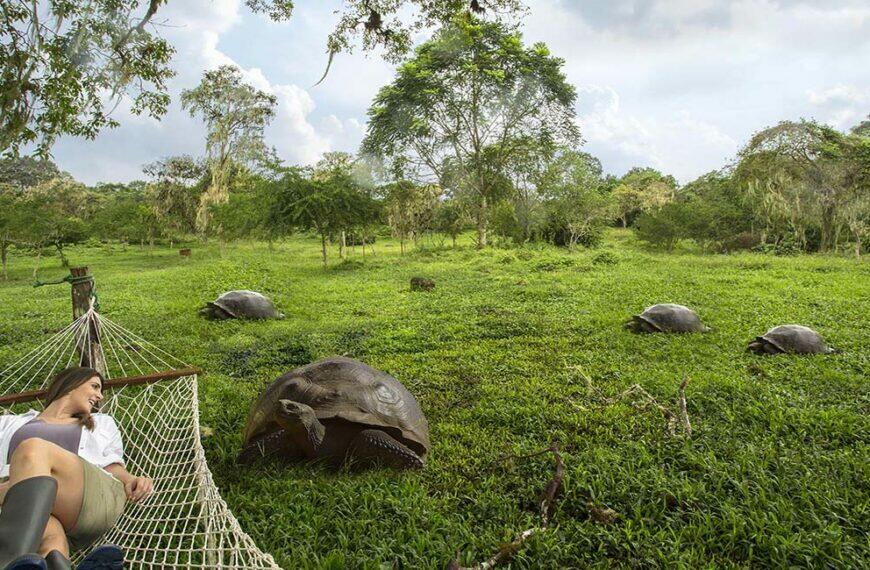
Solo travelers ask us the same thing every week: is a cruise worth the extra cost for one person, or do I stay social and flexible by basing myself on land? Here's the plain trade-off — on money, on how easily you meet people, and on how much of the day is actually yours. We book both, and we're Ecuador-based, so this isn't a pick-a-winner listicle. It's how we'd talk it through with you on the phone.
Both work solo. The choice comes down to three things. A 4–8-day cruise prices by the cabin, so one traveler usually pays a single supplement — the industry norm runs 1.5x to 2x the shared per-person rate — unless you catch one of the few cabins sold without it (Solaris carries 3, Monserrat 1, Alya 1 at a reduced rate). It's the most social option, because you share every meal and landing with the same 16 or so guests. A land-based trip — hotels in Puerto Ayora or Puerto Baquerizo Moreno plus day tours — charges a single-occupancy rate on the hotel room only, not the whole trip, and lets you set your own pace and bolt on a mainland Ecuador leg. Fixed either way: the $200 park entry, the $20 INGALA card, and $250–$600 round-trip domestic flights. Cruise for depth and built-in company; land for control, flexibility, and easier access.
Both are real options for a solo traveler. The decision isn't "which is better" in the abstract — it's which one wins on your priority: cost, company, or control. Get that straight first and the rest falls into place.
A cruise is a fixed route of four to eight days, sleeping aboard a small vessel that carries around 16 guests, with two guided landings a day and one naturalist guide for every 16 guests. Everything is decided for you: where you wake up, when you eat, which trail you walk. Land-based means basing yourself in a hotel on the inhabited islands — mainly Santa Cruz (Puerto Ayora) and San Cristóbal (Puerto Baquerizo Moreno) — and heading out on day tours to nearby sites, then coming back to your own room each night. One is a moving itinerary; the other is a home base you build days around.
There's a third thing worth naming up front, because it only exists on the land-based side. Since we sell Ecuador and Galapagos, a hotel-based islands trip pairs cleanly with a mainland leg in Quito or Guayaquil on the front or back end — and the mainland has far more single-friendly and step-free hotel inventory than a small yacht ever will. A fixed cruise itinerary can't flex that way. Our solo travel guide for the Galapagos covers the wider picture; this page is the cruise-versus-land decision for one person.
Here's the part most pages get wrong for solo travelers. They tell you land-based "skips the single supplement." It doesn't — not entirely. A single traveler pays a single-occupancy premium either way. The difference is what the premium sits on.
On a cruise, the price is the cabin. A cabin is built for two, so one person occupying it pays a single supplement, typically 1.5x to 2x the shared per-person rate depending on vessel and season. That surcharge rides on the whole trip. The exception is the handful of cabins operators sell at, or near, the shared rate: Solaris holds three of them, Monserrat one, and Alya carries one at a reduced supplement. These sit in the cabin inventory year-round — they aren't a shoulder-season promotion. A few catamarans also keep a no-supplement cabin, but those are set aside for odd-numbered families, not for solo travelers, so we don't count them here.
On land, the premium is narrower. You pay a single-occupancy rate on the hotel room — most rooms are priced for double occupancy — but everything else is per person no matter who you travel with: the day tours, the inter-island ferries, the park entry, the flights. You're also choosing from a much deeper pool of rooms, from guesthouses in Puerto Ayora to comfortable hotels, and you can add or drop nights as you like. Pay for one bed for the nights you actually want it, not two fares for a week.
Some numbers are fixed whichever way you go, and they hit a solo budget the same as a couple's: the $200 Galapagos National Park entry fee (non-resident, age 12 and up), the $20 INGALA transit control card, and $250–$600 for round-trip domestic flights between Quito or Guayaquil and the islands. Tips and a mainland night or two sit on top.
Current departures and starting prices — for both cruise cabins and land-based stays — are in the table below.

Show, don't tell, on both sides. On a cruise, you get the same roughly 16 guests at every dinner and every landing for the whole sailing. By the second day the group knows your name; by the fifth you have a snorkel buddy and a coffee-on-deck buddy. It's built-in company — the strongest social case in Galapagos travel. The catch is that the group is fixed. If you don't click with someone, you're still at the same table for seven days.
Land-based flips the shape of it. You meet a rotating cast — new faces on each day tour, other travelers over coffee in Puerto Ayora, someone on the ferry to Isabela. Looser ties, more of them, and the freedom to take a night to yourself when you want one. The misconception we correct most often is that land-based means eating alone. It doesn't. Group day tours put you with other travelers every day you book one; the difference is you choose when to be part of a group and when to sit out.
"The worry I hear most is that going land-based means eating dinner alone every night. It doesn't. You are with other travellers on every day tour you book, and you get to choose the evenings you keep for yourself. On a cruise you don't get that choice, and for plenty of people that is the better deal. Neither one is the lonely option. They are social in different shapes."
— Evelyn Duran, Co-Owner
This is the axis where land-based clearly wins for an independent solo traveler. A cruise itinerary is set — every landing, every meal time, decided before you board. That's a feature if you want zero decisions and someone else handling the logistics. It's a constraint if you want a slow morning, a specific site, or an afternoon off.
Land-based hands the schedule back to you. Choose each day tour, take a rest day, stay an extra night on Isabela for Sierra Negra, or add a Quito or Guayaquil mainland stretch on either end. Access matters here too, and it's a real reason we sometimes steer a solo traveler ashore. Every vessel we book has main-deck cabins, but none has an elevator, and each landing means stepping down into a panga — a small boat — twice a day. If that daily climb is a barrier, a hotel-based program removes it, and the mainland's step-free hotel options widen the trip further.
"Cruises are still my first recommendation for most travelers, but there are cases where a land-based trip is the better choice. Families with very young children who want more flexible timing, for instance, or travelers with reduced mobility who'd rather skip the daily climb into a panga. A hotel-based program lets you set the pace of the trip, with more room to rest or reshape the day's activities around what each group actually needs."
— Marcelo Guerrero, Co-Owner
The whole comparison, scored for a solo traveler:
| For one person | Cruise | Land-based |
|---|---|---|
| Cost | Cabin priced for two; solo pays a single supplement (1.5x–2x the shared rate) unless you land a no-supplement cabin (Solaris 3, Monserrat 1, Alya 1 reduced) | Single-occupancy rate on the hotel room only; day tours, ferries, park fees and flights are per person either way; far more room inventory, especially on the mainland |
| Sociability | Built-in: the same ~16 guests at every meal and landing, all week | Rotating: new people on each day tour, plus town life in Puerto Ayora or Puerto Baquerizo Moreno |
| Flexibility | Fixed route, fixed schedule, decided for you | You set the pace: rest days, extra nights, and a mainland Ecuador leg on either end |
| Best for the solo traveler who… | wants depth, zero logistics, and instant company | wants control, a slower pace, and easier access if a daily panga climb is a barrier |
Who should pick which? If your priority is seeing the most wildlife with the least planning and coming home with a group chat, book the cruise — and if cost for one is the sticking point, ask us to check the no-supplement cabins first. If your priority is controlling your own days, keeping the room premium narrow, or adding a mainland leg, base yourself on land. There's no universal winner. There's the trade-off that fits the trip you actually want. You can compare live options on our cruises and land-based packages page, or scan the cruise side on our Galapagos cruises and tours hub.

Land-based is a legitimate choice, not a consolation — so here's the concrete version. A solo week ashore usually looks like this: base in Puerto Ayora on Santa Cruz, take day tours out to sites like Bartolomé, Pinzón, or North Seymour, ferry across to Isabela for Sierra Negra and the tortoise-breeding highlands, and keep self-directed time for Tortuga Bay and the Charles Darwin Research Station in town. San Cristóbal (Puerto Baquerizo Moreno) works the same way as an alternate base, with sea lions on the town beach and Kicker Rock offshore.
On safety: the inhabited islands are among the more straightforward places in the region to travel alone, with small, walkable towns and a steady flow of other travelers. Use registered taxis, keep valuables in the hotel safe, and apply the same standard care you would in any unfamiliar town — verify specifics for your dates rather than treating any of it as a guarantee. For the deeper solo-safety read, especially for solo women, see our solo female travel advice for Ecuador and Galapagos.
Starting prices for solo-friendly cruise and land-based options are in the departures table below.
Talk with an expert insider — we'll price your solo trip both ways in 24 hours.
USA & Canada 1-773-280-9571 · Ecuador +593-987-004-404 · [email protected]
Both work — it depends on your priority. A cruise gives you the most wildlife with zero planning and built-in company: the same ~16 guests for the whole sailing. Land-based gives you control over your days, a narrower single-occupancy premium, rotating company on day tours, and the option to add a mainland Ecuador leg. Tell us whether cost, company, or flexibility matters most and we'll point you to the fit.
Usually, yes — a cruise cabin is priced for two, so one person pays a single supplement, commonly 1.5x to 2x the shared per-person rate. The way around it is a cabin sold without the supplement: Solaris carries three, Monserrat one, and Alya one at a reduced rate, in their inventory year-round. Those go quickly, so ask us early which are open for your dates.
For most solo travelers, land-based is lighter on the wallet, because the single-occupancy premium sits only on the hotel room rather than on the whole trip, and you pay for the nights you want. But a cruise cabin sold without the single supplement can close the gap. The fixed costs are the same either way: $200 park entry, $20 INGALA card, and $250–$600 round-trip domestic flights.
A cruise is the more social option by design — the same small group shares every meal and landing, so ties form fast and hold all week. Land-based is more variable: you meet a rotating cast on day tours and around town, with looser connections and more freedom to have a night to yourself. Cruise for built-in company; land for variety and choice.
Yes, and plenty of solo travelers do. You base yourself in Puerto Ayora or Puerto Baquerizo Moreno, join group day tours to the wildlife sites, and keep your own pace between them. The towns are small and walkable, and day tours put you with other travelers whenever you want company. We can package the hotels, tours, and inter-island transport so you're not assembling it piece by piece.
Book a cabin an operator sells without the supplement — Solaris (3 cabins), Monserrat (1), or Alya (1 at a reduced rate). These are limited and year-round, so the earlier you ask, the better the odds one is open for your dates. If none fits, we compare the supplement against a land-based plan for the same trip and show you the real cost of each for one person.
The inhabited islands are among the more straightforward places in the region to travel alone — small towns, walkable centers, and a steady flow of travelers. On a cruise, the environment is small and guided, with no off-on-your-own stretches. In Quito or Guayaquil between flights, apply standard urban care: registered taxis, hotel safes, no late-night wandering in unfamiliar areas. Our solo female travel advice goes deeper on the mainland side.
Effectively, yes — most hotel rooms are priced for double occupancy, so a solo traveler pays a single-occupancy rate. The difference from a cruise is that this premium sits only on the room, not the whole trip, and there's far more room inventory to choose from, especially if you add a mainland Ecuador leg where single-friendly hotels are easy to find. Everything else ashore — day tours, ferries, fees — is per person regardless.
Live availability and starting prices for our Galapagos departures. Dates and rates update automatically.
Price your solo Galapagos trip both ways. Tell us your dates, your budget, and whether cost, company, or flexibility matters most, and we'll send you a cruise option and a land-based option for one person — including which no-supplement cabins are open — within 24 hours. We book both, and we'll tell you straight which fits your trip.
Talk with an expert insider: USA & Canada 1-773-280-9571 · Ecuador +593-987-004-404 · [email protected]
More for solo travelers: our solo Galapagos travel hub and our cruises and land-based packages.