

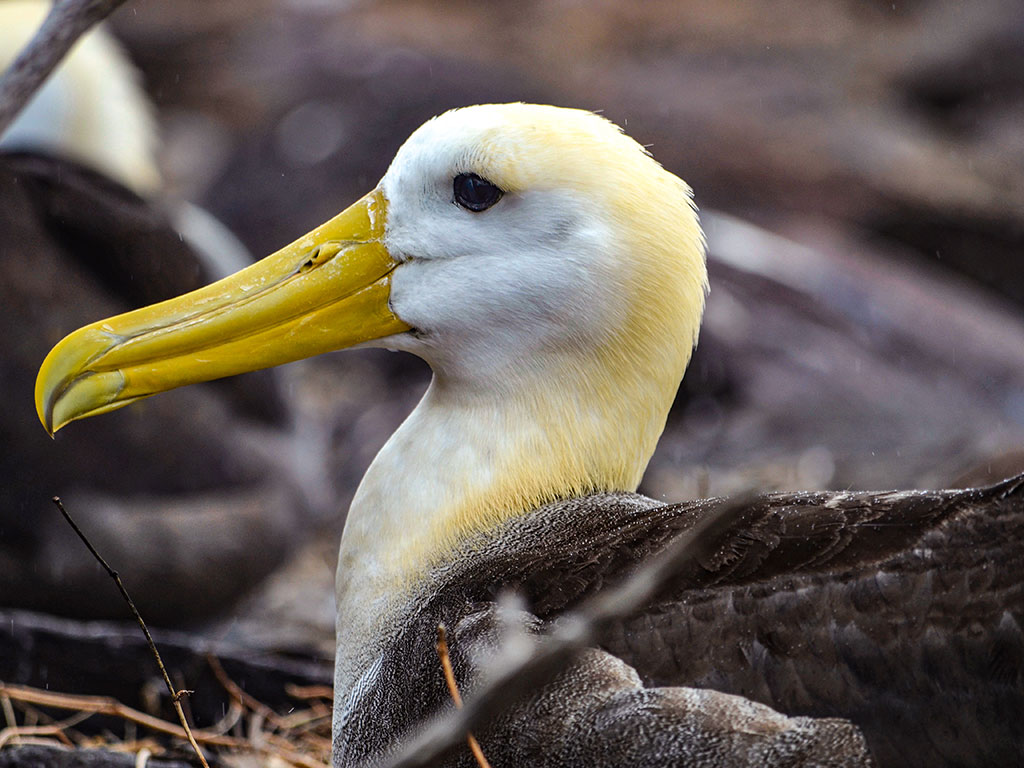
If there's a single wildlife encounter in the Galapagos that makes grown adults cry — genuinely, openly cry — it's watching Waved Albatrosses on Espanola. These magnificent birds, with wingspans stretching over two meters, perform an elaborate courtship dance that involves bill-clacking, sky-pointing, and what can only be described as a slow, dignified waltz. Your children will be mesmerised. You might be, too.
The Waved Albatross is found on only one island in the entire world: Espanola. And Espanola is only accessible on eastern Galapagos itineraries. That alone makes the eastern route worth serious consideration for families. But the case goes well beyond a single species. Eastern itineraries offer calmer seas, some of the most accessible snorkeling sites in the archipelago, and a collection of wildlife encounters that are particularly well-suited to families with younger children or first-time visitors to the islands.
We book eastern itineraries for families every week. Here's why — and which specific vessel and itinerary combinations we recommend.
The eastern side of the Galapagos archipelago sits in the lee of the larger western islands, which means the seas are generally calmer and the water is warmer. For families — particularly those with younger children, first-time snorkellers, or anyone with even mild concerns about seasickness — this is a meaningful practical advantage.
But it's not just about comfort. The eastern islands have their own distinctive wildlife that you won't find elsewhere:
We need to talk about timing, because this matters enormously. Waved Albatrosses are present on Espanola from approximately April through December. Outside that window — January through March — the adults are at sea and the island, while still beautiful, loses its signature species.
If seeing the albatross is a priority for your family (and we think it should be), plan your trip accordingly. The peak breeding display happens roughly April through June, when the courtship dances are at their most elaborate. By September and October, you'll see chicks at various stages of development, which is equally fascinating for children — watching a fluffy, oversized chick figure out how to use wings it's never tried before is genuinely compelling.
Espanola delivers more than albatrosses. A typical visit includes two stops:
Punta Suarez — The albatross colony, plus Nazca boobies, blue-footed boobies performing their famous mating dance, swallow-tailed gulls (the world's only nocturnal gull), marine iguanas in their unique Espanola coloring (red and green, often called "Christmas iguanas"), and a dramatic blowhole that shoots seawater 20 meters into the air. The trail is moderate — about 2 kilometers over uneven terrain — and suitable for children aged 6 and above with reasonable fitness.
Gardner Bay — One of the most beautiful beaches in the Galapagos. White sand, turquoise water, and sea lions that are completely indifferent to your presence. Children can sit on the beach and have sea lion pups approach them out of pure curiosity. The snorkeling off Gardner Bay is excellent for families — sheltered water, good visibility, and an abundance of reef fish, rays, and sea turtles.
Beyond the Waved Albatross, eastern routes deliver a rich and diverse wildlife portfolio:

Eastern itineraries are offered by more vessels than western routes, which means more choice — but also more variation in quality. These three combinations are the ones we recommend most frequently to families.
The Grand Majestic is a 16-passenger catamaran with a strong reputation for comfort and service. Itinerary A covers the southeastern islands including Espanola, San Cristobal, and Floreana — three of the most family-friendly islands in the archipelago.
As a catamaran, the Grand Majestic offers excellent stability even on the few open-water crossings the eastern route requires. The cabins are spacious by Galapagos standards, and the crew are experienced with families. The vessel also carries snorkeling equipment in a range of sizes, including gear that fits younger children properly — something that isn't universal across the fleet.
Family highlight: Post Office Bay on Floreana, where an 18th-century barrel serves as a mail drop. Visitors leave postcards and take others to hand-deliver. Children find this endlessly charming, and it's a genuine piece of Galapagos history that connects them to centuries of Pacific exploration.
The Galapagos Angel is a 16-passenger motor yacht that runs a thorough eastern itinerary visiting Espanola, San Cristobal, and Santa Fe. She's a well-maintained vessel with a reputation for good food and attentive naturalist guides — both of which matter more than you'd think on a family cruise.
The Galapagos Angel's eastern itinerary includes a visit to Punta Pitt on San Cristobal, which is the only site in the Galapagos where you can see all three booby species — blue-footed, red-footed, and Nazca — in a single location. For families building a wildlife checklist (and many children become obsessive about this), Punta Pitt is a goldmine.
Family highlight: Santa Fe Island, home to the Santa Fe land iguana — a species found nowhere else. The trail winds through a forest of giant prickly pear cacti, some over 10 meters tall, while sea lions doze on the beach below. It's one of those visits where children realize every island is genuinely different.

The Passion is a 12-passenger motor yacht — one of the smaller vessels in the fleet, which means a more intimate experience and fewer families competing for the guide's attention. Itinerary A - East focuses on the southeastern islands with dedicated time on Espanola.
The Passion's smaller size means she can access some anchorages that larger vessels skip, and the guide-to-passenger ratio is excellent. With only 12 guests, your children get more time asking questions, more flexibility in pacing, and more opportunity for those quiet, unscheduled wildlife moments that become the trip's real highlights.
Family highlight: The snorkeling at Kicker Rock (Leon Dormido) off San Cristobal — a dramatic volcanic formation rising from the sea, with a channel between the two rock faces where you swim alongside reef sharks, rays, and sea turtles. It's thrilling rather than dangerous (the sharks are completely uninterested in humans), and it gives older children a genuine adventure story to bring home.

Comparing itinerary lengths?
Eastern routes are available in several durations. See our guides to 5-day, 6-day, and 7-day family cruises to find the right length for your family.
We mention this throughout our family guides because it genuinely matters: the eastern Galapagos has calmer seas than the west. This isn't marketing — it's oceanography. The eastern islands are sheltered from the Humboldt Current's full force and don't experience the same cold-water upwelling that creates choppier conditions along the western coast.
What does this mean for your family in practice?
That said, the Galapagos is open ocean. Even on the calmest eastern route, you may encounter some swell, particularly between June and November. Bring basic seasickness medication just in case. But compared to a western itinerary, the difference is noticeable and consistent.
If seasickness is a primary concern, also read our guide to the most stable Galapagos ships for families.
The eastern route is rewarding year-round, but the season you choose affects what you'll see:
For a complete seasonal analysis, see our guide to the best time to visit the Galapagos with families.
Eastern itineraries are the most popular family routes in the Galapagos, which means the best cabins book well in advance — particularly for the April-June albatross season and for departures that coincide with school holidays. We track availability across all three vessels above (and many more) and can tell you exactly what's open on your dates, which cabins work for your family configuration, and whether the albatross timing aligns with your travel window.
We've been to Espanola more times than we can count. We've watched families experience the albatross courtship for the first time, and it never gets old. Let us help you get there.
Tell us your family's ages, preferred dates, and must-see species — we'll find the eastern itinerary that fits.
USA & Canada: 1-773-280-9571
Ecuador: +593-987-004-404
Email: [email protected]



