Written by Marcelo Guerrero Oquendo, Co-Owner of Galapagos Insiders since 2015. Last updated May 2026.
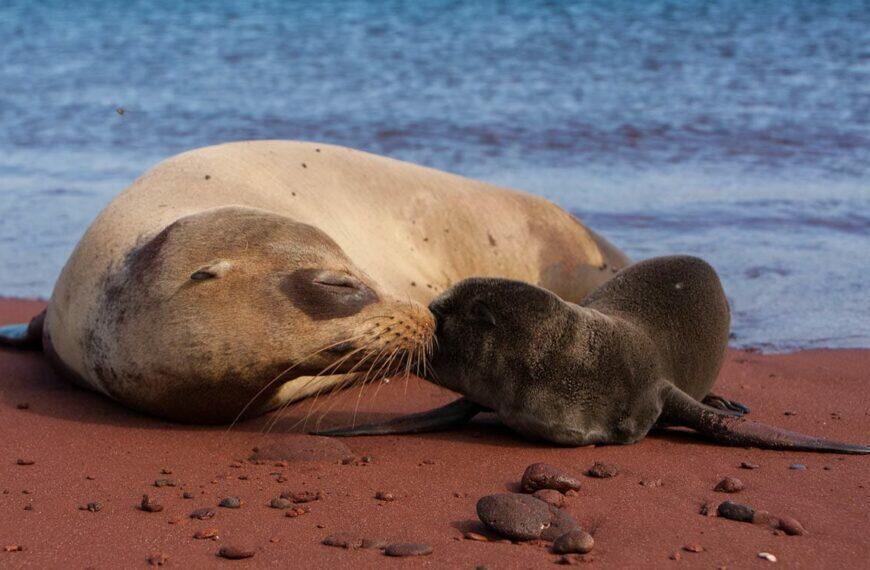
The Galapagos isn't a beach-vacation destination. It's a wildlife destination with beaches. If you came to lounge with a piña colada in front of an empty white-sand stretch, you'll be disappointed. If you came to share a beach with sea lions, marine iguanas, nesting green turtles, and flamingos in a brackish lagoon behind the dunes — you'll be thrilled.
Talk with an expert insider — we'll match you to the right beach-rich itinerary in 24 hours.
USA & Canada 1-773-280-9571 · Ecuador +593-987-004-404 · [email protected]
The best Galapagos beaches are Tortuga Bay (Santa Cruz, walkable from Puerto Ayora — the calmest swimming lagoon in the central archipelago), Gardner Bay (Española, white sand and a sea-lion colony you walk through), Cerro Brujo (San Cristóbal, sea-lion pups September–November), Punta Cormorant (Floreana, the green-sand olivine beach plus a flamingo lagoon), Bachas Beach (Santa Cruz, green-turtle nesting site), Puerto Villamil black-sand beach (Isabela, the longest walk-on beach in the islands), and Darwin Bay (Genovesa, coral-sand beach inside a sunken caldera with frigatebirds and red-footed boobies overhead). Each one is a wildlife beach. Most have GNPD time caps and ranger oversight. Many are reachable only by liveaboard — Gardner Bay, Punta Cormorant, and Darwin Bay especially. Land-based travelers get Tortuga Bay, Puerto Chino, Puerto Villamil, and a handful of day-tour beaches; cruise travelers get the rest.
Every species window, sand color, and access note below comes from our naturalist-guide logs and the boat operators we work with across 2024–2026. Not from generic operator marketing.
| Beach | Island | Route | Sand | Access | Swim? | Wildlife signature |
|---|---|---|---|---|---|---|
| Tortuga Bay | Santa Cruz | Eastern + land-based | White | Walkable from Puerto Ayora (45-min trail) | Yes — calmest lagoon (Playa Mansa) | Marine iguanas, white-tip reef shark, occasional ray |
| Gardner Bay | Española | Eastern | White | Wet landing, cruise only | Yes — gentle | Galapagos sea-lion colony, hood mockingbird |
| Cerro Brujo | San Cristóbal | Eastern | White | Wet landing, cruise only | Yes | Sea-lion pups (Sep–Nov), blue-footed booby |
| Punta Cormorant | Floreana | Eastern + Southern | Green olivine | Wet landing, cruise only | No (turtle nesting) | Greater flamingo (lagoon), green sea turtle (nesting Dec–May) |
| Bachas Beach | Santa Cruz | Eastern + Northern | White | Wet landing, cruise only | Yes — gentle | Green sea turtle (nesting), flamingo (brackish lagoon), Sally Lightfoot crab |
| Puerto Villamil | Isabela | Western + land-based | Black volcanic | Walkable from Puerto Villamil town | Yes — long beach, surfable break at one end | Marine iguana, flamingo lagoon nearby (Las Salinas), pelican |
| Darwin Bay | Genovesa | Northern | Coral sand | Wet landing, cruise only | Yes — protected caldera | Frigatebird (overhead), red-footed booby, swallow-tailed gull |
| Puerto Chino | San Cristóbal | Land-based | White | Walkable / short taxi from Puerto Baquerizo Moreno | Yes — light surf | Sea lion (small colony), blue-footed booby |
| Sullivan Bay | Santiago | Eastern + Northern | Black pahoehoe lava + small white pocket | Dry landing on lava, small adjacent beach | Yes — small bay | Pahoehoe lava field, Galapagos penguin (occasional) |
| Las Bachas (twin) | Santa Cruz | Eastern + Northern | White | Wet landing, cruise only | Yes | Same module as Bachas — second beach beside the lagoon |
Most travelers read "beach" and picture Tulum, Phuket, Bora Bora — fine sand, palm trees, beach bars, a sun-lounger you rent for the day. The Galapagos has none of that on most of these beaches. Gardner Bay has no facilities, no shade, no concession, no rentals. You walk off a panga, you have 90 minutes to two hours, and then a ranger or a guide signals you back to the boat. Tortuga Bay has no concession either — you pack water in, you pack trash out, and the GNPD entrance station closes at 5:00 p.m.
What these beaches actually offer is wildlife at a distance most beach destinations would rope off. A sea lion sleeps 3 metres from your towel and ignores you. A marine iguana spits salt and scuttles past your foot. A green turtle slides through the shorebreak. A flamingo wades in the lagoon behind the dunes. The 2-metre rule from the Galapagos National Park Directorate protects the wildlife from you — not the other way around.
If your travel party includes someone who needs the lounging-beach experience, say it plainly at booking. We'll match you to itineraries with extra Tortuga Bay time, an Isabela land extension on Puerto Villamil black-sand beach (the longest walk-on beach in the archipelago), or a Finch Bay / Pikaia extension where the resort itself runs the beach amenities. We won't pretend Gardner Bay is a beach vacation. It isn't. It's better.
We've walked every beach on this list more than once, and we send travelers onto these shores year-round across our portfolio of 38 GNPD-licensed vessels. Each beach is governed by GNPD daily-visitor caps, time slots, and licensed-guide rules. Pick the wrong one for your group's interests and you'll have a beautiful 90 minutes — but not the experience you came for. Beach-rich Eastern and Northern cruises start from Budget tier / Mid-range tier / Luxury tier, per person, double occupancy, 2026 USD — these are minimum-departure rates for the shortest 3-/4-day promo itineraries; typical 8-day cruise pricing runs roughly 2× higher (see our cost guide).

This is the question that decides the trip. The marquee wildlife beaches — Gardner Bay, Punta Cormorant, Darwin Bay, Bachas — are all GNPD-allocated to liveaboard cruise itineraries. You can't day-tour to them from a hotel. The town and walkable beaches — Tortuga Bay, Puerto Villamil, Puerto Chino, Cerro Brujo (via day tour) — are reachable from a hotel base on Santa Cruz, Isabela, or San Cristóbal respectively.
Most travelers who say "I want a Galapagos trip with great beaches" actually want the wildlife beaches, and the wildlife beaches require a cruise. The exception is the traveler who already has a wildlife-rich cruise component and wants extra beach lounging on either end — that's where a 3- or 4-night Isabela land extension on Puerto Villamil black-sand beach is the right answer.
| Approach | Wildlife beaches accessible | Town / walkable beaches | Best for |
|---|---|---|---|
| Cruise (5–8 day, Eastern) | Gardner Bay, Cerro Brujo, Punta Cormorant, Bachas, Tortuga Bay (if Santa Cruz day included) | Tortuga Bay | Travelers who want the marquee wildlife beaches |
| Cruise (5–8 day, Northern) | Darwin Bay, Bachas + most Eastern beaches if combined | Tortuga Bay (if Santa Cruz day included) | Travelers prioritizing Genovesa + frigatebirds |
| Cruise (5–8 day, Western) | Limited beach time — Western is more lava-landing / panga-snorkel; Puerto Egas (Santiago) and Urbina Bay (Isabela) are the primary beaches | None walkable | Travelers prioritizing wildlife density over beach time |
| Land-based (Santa Cruz hotel) | None reachable directly | Tortuga Bay, Garrapatero | Time budget under 5 days, families with under-6 kids, mobility constraints |
| Land-based (Isabela hotel) | None reachable directly | Puerto Villamil black-sand beach (the closest to a beach-vacation beach), Las Tintoreras (day tour) | Travelers who want the most beach-vacation experience the islands offer |
| Land-based (San Cristóbal hotel) | Cerro Brujo via day tour (one of the few "wildlife-grade" beaches accessible without a cruise) | Puerto Chino, Playa Mann, La Lobería | Travelers who want sea-lion-rich beaches without a cruise |
| Hybrid (4-day cruise + 3–4 day Isabela) | Most marquee wildlife beaches + extended Puerto Villamil lounging | Tortuga Bay + Puerto Villamil | Best of both — wildlife beaches + actual beach time |
→ Galapagos land-based tours 2026 — full breakdown of what land-based access reaches and what it misses.

The vessels below run Eastern and Northern itineraries that include the marquee wildlife beaches (Gardner Bay, Punta Cormorant, Cerro Brujo, Bachas, Darwin Bay). All five are luxury-class — these are the boats We confirmed as 2026 priority luxury inventory and they each cover the beach-heavy Eastern + Northern routes consistently. Mid-range options exist; talk with us if your budget is mid-range and beach time is the priority.
Live next-departure feeds for the five vessels above:
Browse all 2026 luxury 8-day Eastern + Northern departures (the beach-heavy routes):

Most Galapagos beaches are not designed for swimming. Some are. Here's the per-beach read.
Reef-safe sunscreen is required by GNPD on every wildlife beach. Standard chemical sunscreens are explicitly banned at most snorkel and beach landings — see GNPD visitor rules.
For travelers planning to combine beach time with snorkeling, see our Galapagos snorkeling cruises 2026 page — most beach-rich Eastern itineraries also hit the marquee snorkel sites (Devil's Crown, Champion Islet, Bartolomé).
Two seasons. They feel different on a beach.
Warm season (December–May). Air 26–32°C. Water 22–26°C. Calmer seas. Brighter sun. Green-turtle nesting on Tortuga Bay (Playa Brava), Bachas, and Punta Cormorant — December through May, with hatchlings emerging March–May. Marine iguanas at peak visibility (warm-season courtship coloration on Española and Floreana). Flamingos at peak in the brackish lagoons (Punta Cormorant, Las Salinas) March–May. Warmest water of the year is February–March.
Cool season (June–November). Air 20–26°C. Water 18–22°C in the central archipelago, 16–19°C on the Western route (Cromwell upwelling). Garúa mist. Greyer light. Sea-lion pups widespread — Cerro Brujo and Gardner Bay sea-lion-pup peak is September–November. Whale-shark season at Darwin and Wolf (dive-only). Hammerhead schools at Kicker Rock (snorkel from a cruise). Beaches feel cooler and emptier — fewer cruise passengers in September–October.
The trade-off is real. Want the warmest water and the best beach-photo light? Book January–April. Want the sea-lion pups on the beach and the lowest cruise prices of the year? Book September–October. Want green-turtle hatchlings? Book March–May.
| Month | Air (°C) | Water (°C) | Beach signature event | Best route | Cost tier |
|---|---|---|---|---|---|
| January | 26–30 | 23–26 | Marine iguana mating display; turtle nesting underway | Eastern | Mid-range to high |
| February | 27–32 | 24–26 | Warmest water; flamingo nesting peak; turtle nesting | Eastern | High (peak) |
| March | 27–32 | 24–26 | Turtle hatchlings begin; iguanas at peak color | Eastern + Western | High |
| April | 26–30 | 23–25 | Turtle hatchlings; waved albatross arrives Española | Eastern | Mid-range |
| May | 25–28 | 22–25 | Last turtle nesting; calm seas | Eastern + Western | Mid-range |
| June | 22–26 | 20–23 | Garúa mist starts; sea-lion-pup season opens | Western + Northern | Mid-range |
| July | 20–25 | 18–22 | Sea-lion pups multiply at Cerro Brujo + Gardner Bay | Eastern | Mid-range to high |
| August | 20–25 | 18–21 | Cooler water; rougher seas Western | Eastern (calmer) | High (peak) |
| September | 20–24 | 18–21 | Sea-lion-pup peak Cerro Brujo + Gardner Bay; cheapest month per cost guide | Eastern | Lowest |
| October | 21–25 | 19–22 | Sea-lion pups still abundant | Eastern + Western | Low |
| November | 22–26 | 20–23 | Transitional; sea calms | Eastern + Western | Low to mid-range |
| December | 24–28 | 22–25 | Warm season returns; turtle nesting begins | Eastern | High (holiday peak) |
A typical beach landing on a cruise itinerary runs 90 minutes to 2 hours. The panga (a 10-passenger zodiac inflatable) leaves the vessel at 7:45–8:00 a.m. or 3:30–4:00 p.m., depending on the site's GNPD-allocated slot. You step off the panga into shin-deep water (a "wet landing") wearing sandals or water shoes. The naturalist guide briefs the wildlife rules on the beach — 2-metre minimum distance from sea lions, no flash photography near nesting birds, no crossing roped-off turtle-nesting zones, no beach toys, no food.
You walk. You sit. You photograph. You swim if the beach allows it. The guide signals when it's time to return to the panga. There is no concession, no shade structure, no rental kiosk, no bar. Bring your own water, hat, reef-safe sunscreen, and a dry bag. Most vessels supply towels.
Sites with sea-lion colonies (Gardner Bay, Cerro Brujo, Champion Islet panga snorkel) get a pre-landing reminder on territorial-bull behavior — the guide will set the spacing, and you will trust the spacing. The bulls do charge.
We don't recommend any 8-day cruise for travelers who can't board a panga ladder unassisted or step off into shin-deep water — the National Park clinic on Santa Cruz is the only medical resource on the islands, and a Western itinerary is 2–3 days from it on a hard schedule.

Beach landings pair naturally with snorkeling — same gear bag, same wetsuit on the cool-season sailings — and with wildlife viewing on the dry-landing days. Most Eastern 8-day cruises alternate beach + snorkel days with dry-landing wildlife walks (Punta Suárez, North Seymour, Bartolomé summit).
Tortuga Bay (Santa Cruz), Gardner Bay (Española), Cerro Brujo (San Cristóbal), Punta Cormorant (Floreana), Bachas (Santa Cruz north shore), Puerto Villamil (Isabela), and Darwin Bay (Genovesa) are the seven beaches with the strongest wildlife and access combinations. The marquee wildlife beaches — Gardner Bay, Punta Cormorant, Bachas, Darwin Bay — are accessible only on cruise itineraries.
Not in the Caribbean or Mexican-resort sense. The Galapagos is a wildlife destination with beaches, not a beach-vacation destination. The closest equivalent is a 3- or 4-night land extension on the Puerto Villamil black-sand beach (Isabela) — the longest walk-on beach in the archipelago, with beach bars, hammocks, and a surfable break. Most travelers who want both wildlife and lounging time book a 4-day cruise + 3-day Isabela land extension hybrid.
Yes — Gardner Bay (Española), Cerro Brujo (San Cristóbal), Tortuga Bay (Santa Cruz), Bachas (Santa Cruz), and Puerto Chino (San Cristóbal) are all white-sand. The Galapagos also has rarer-color beaches: Punta Cormorant (green olivine sand), Puerto Villamil (black volcanic sand), Darwin Bay (coral-derived white), and Sullivan Bay (black pahoehoe lava).
Tortuga Bay Playa Mansa, Gardner Bay, Cerro Brujo, Bachas, Puerto Villamil, Darwin Bay, Puerto Chino, and the small bay at Sullivan Bay all allow swimming. Tortuga Bay Playa Brava (the long open beach) does not — rip currents. Punta Cormorant does not — Flour Beach is a turtle-nesting site and the landing-side beach is wet-landing transit only.
The warm season (December–May) brings 22–26°C water, calmer seas, and green-turtle nesting on Tortuga Bay, Bachas, and Punta Cormorant. Warmest water is February–March. The cool season (June–November) has cooler water (18–22°C) but adds the sea-lion-pup peak at Cerro Brujo and Gardner Bay (September–November), and September is the cheapest cruise month of the year per our cost guide.
Yes — Tortuga Bay (45-minute walk from Puerto Ayora on Santa Cruz), Puerto Villamil black-sand beach (walkable from Puerto Villamil town on Isabela), Puerto Chino (short taxi from Puerto Baquerizo Moreno on San Cristóbal), Playa Mann + La Lobería (walkable from Puerto Baquerizo Moreno), and Garrapatero (taxi-accessible from Puerto Ayora). All other wildlife beaches require a cruise.
All of them have sea lions to some degree. The reliable colonies are Gardner Bay (year-round, hundreds of animals), Cerro Brujo (year-round, with pup peak September–November), Champion Islet (panga-only, snorkel beach), and the town pier at Puerto Villamil (small permanent colony). Galapagos sea lions are protected under GNPD rules — a 2-metre minimum distance applies, but the sea lions don't always read the rule.
Yes for the calm-water beaches — Tortuga Bay Playa Mansa, Bachas, Cerro Brujo, Darwin Bay, the town end of Puerto Villamil. Adult supervision is required at every wildlife beach because the sea-lion bulls do charge if territorial. We don't recommend any 8-day cruise for children under 6 — the panga-ladder boarding and the GNPD wildlife-distance rules are easier with older kids.
Yes — required by GNPD on every wildlife beach and snorkel landing. Standard chemical sunscreens (containing oxybenzone or octinoxate) are explicitly banned. Bring a reef-safe brand from home; the Puerto Ayora and Puerto Villamil tiendas stock some, but selection is limited and prices are 2–3× North American retail.
Inquiry → 24-hour proposal → 30% deposit holds the cabin → balance 60 days before sailing. We confirm the beach-rich days (Gardner Bay, Punta Cormorant, Bachas, Cerro Brujo, Darwin Bay if Northern) at proposal stage so you don't find out at boarding which beaches your itinerary actually includes. USA & Canada 1-773-280-9571 · Ecuador +593-987-004-404 · [email protected].
A beach-rich Galapagos cruise in 2026 runs $4,500–$11,320+ per person all-in (cruise + flights + park fee + tips), depending on vessel class. A hybrid 4-day cruise + 3-day Isabela land extension typically runs $3,800–$7,500 per person all-in. See Galapagos Cruise Cost 2026 for the line-by-line breakdown.

"Our six-day stay aboard the Galapagos Sea Star yacht was truly the highlight of the trip. The crew members were exceptional — warm, attentive, and genuinely passionate about making our experience unforgettable. Our naturalist was extremely knowledgeable. Every excursion felt special, and her enthusiasm made a lasting impression on all of us."
Karen C. from New York City (Tripadvisor Review) — Galapagos Sea Star, March 2026
"Our group of 5 had a wonderful trip to the Galapagos with the assistance of Galapagos Insiders on the Hermes cruise. Everything was well organized, and Evelyn was great to work with from the beginning. The Hermes cruise was fantastic, and the whole experience exceeded our expectations."
Tim M. from Grand Rapids, Michigan (Tripadvisor Review) — Hermes, February 2026
Aggregate rating across our review sources: 4.9 / 5 across 350 verified reviews (2021–2026) — TripAdvisor, Trustpilot, Google Business Profile, WeTravel.
For the full informational guide to Galapagos beaches and the wildlife you'll find on each one, see our travel-blog index of per-island posts — every beach above has a deeper visitor-site article behind it.
24-hour quote. No-pressure proposal. We'll match you to the beaches that match what you actually want — the marquee wildlife landings on a cruise, the long lounging beach on Isabela, or the hybrid that gets both.
USA & Canada 1-773-280-9571 · Ecuador +593-987-004-404 · [email protected]
We grew up here. Let us show you home.
Follow us on Facebook for live cabin releases and trip-report photos.