Seven days is the classic Galapagos expedition — the duration that naturalists recommend, repeat visitors choose, and that delivers the most complete picture of these extraordinary islands. A 7 day Galapagos family cruise rewards you with something shorter trips cannot match: depth.
We're not talking about ticking off a species checklist (though you'll see more animals than on any other length). We're talking about the understanding that develops over a full week. By day five, your children stop saying "look, a sea lion" and start saying "that's a juvenile — see how its fur is different?" By day seven, they've watched evolution in action and experienced something that changes how they see the natural world.
Here's our complete guide to choosing and making the most of a seven-day family cruise.
The Galapagos archipelago spans 13 major islands and dozens of smaller islets, each with its own unique wildlife and landscape. A seven-day cruise visits more islands than any shorter itinerary, giving your family the broadest possible experience. While a 5-day cruise covers roughly 70% of the headline species and a 6-day cruise reaches about 85-90%, a seven-day cruise gets you as close to comprehensive coverage as any single trip can achieve.
Crucially, seven-day itineraries are more likely to include the western islands — Isabela and Fernandina — which are home to species found nowhere else in the archipelago: Galapagos penguins, flightless cormorants, and some of the largest marine iguana colonies in the islands. If these species are on your family's must-see list, seven days gives you the best chance.
On shorter cruises, every landing is a parade of new species — thrilling, but overwhelming. On a seven-day cruise, repetition creates recognition. Your children begin to ask "why" questions: Why are the iguanas on this island a different color? Why do the boobies here nest on rocks while the ones yesterday nested in trees? These are Darwin's questions — and asking them on the same volcanic rock where Darwin asked them is an experience no classroom can replicate.
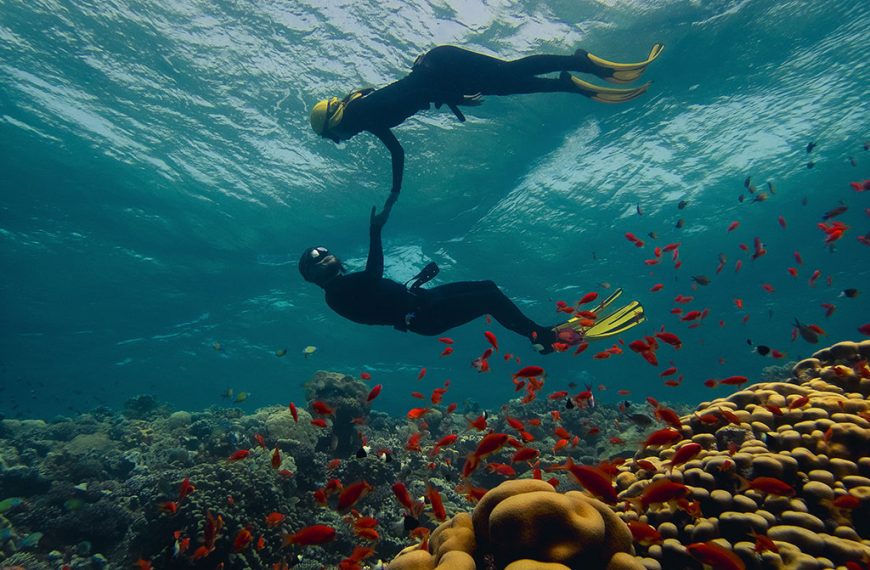
Snorkeling in the Galapagos is extraordinary — but it takes time for children to become comfortable in the water. On a seven-day cruise, your family might snorkel six or seven times. The first session is about getting used to the mask. By the third, your children are swimming alongside sea turtles without flinching. By the fifth, they're spotting reef sharks and rays on their own. That progression from nervous to genuinely skilled needs a full week to develop properly.
By mid-week, something shifts. Your family stops living on "holiday time" and starts living on "island time." Wake with the sunrise, morning excursion, lunch on deck while the boat crosses to the next island, afternoon in the water, sunset from the top deck, evening briefing about tomorrow. Seven days is enough time for this rhythm to become real rather than novel — and it's profoundly restorative for families who spend their normal lives rushing between school, work, and activities.

Seven-day itineraries in the Galapagos generally follow one of two broad patterns: eastern routes and western routes. Understanding the difference helps you choose the right cruise for your family's priorities.
Eastern routes typically visit San Cristobal, Espanola, Floreana, and Santa Cruz. Highlights include:
Best for families who want: calmer waters (eastern crossings tend to be shorter and smoother), historical context, and giant tortoises in the wild.
Western routes venture to Isabela and Fernandina — where the wildlife is wilder, the landscapes more volcanic, and the species list includes animals found on no other route:
Best for families who want: penguins, flightless cormorants, and the most "untouched" landscapes. Western crossings can be rougher, so consider a stable catamaran if seasickness is a concern.
Both are extraordinary. We gently lean toward eastern itineraries for families with younger children (smoother waters, easier landings) and western itineraries for families with adventure-ready teenagers. But there's no wrong choice — talk with an expert insider and we'll help you weigh the options.
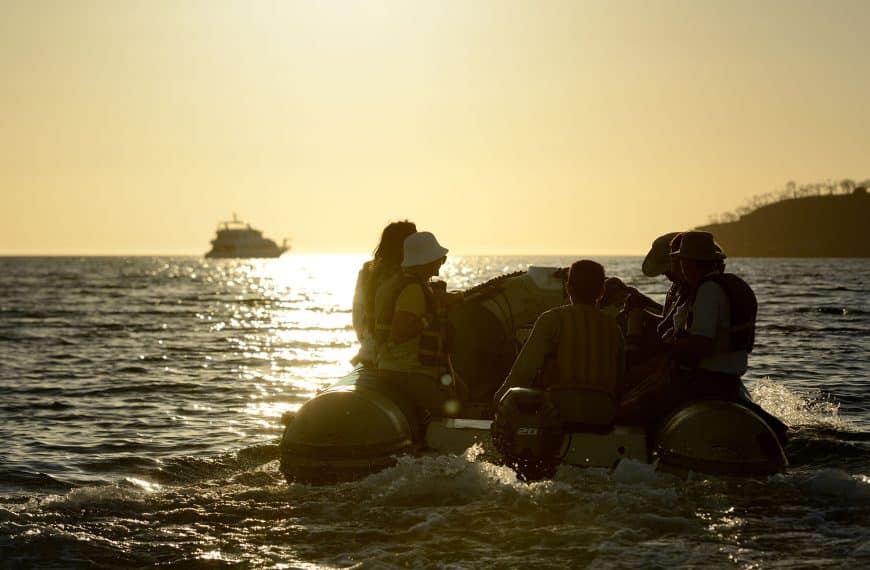
The Galapagos Horizon is a vessel we recommend with confidence for families taking the full seven-day expedition. She's built a strong reputation among families, and the consistency of the onboard experience — from crew warmth to itinerary pacing — makes her a reliable choice for a week-long trip where you need everything to work.
Why families love her for 7-day trips:
Best for: Families who want a reliable, well-established vessel for a full week. An excellent "safe bet" for families booking their first seven-day expedition.
The Tribute brings modern design and contemporary comfort to the seven-day format. She's one of the newer vessels in the Galapagos fleet, and that newness shows in the cabin finishes, the quality of the common areas, and the overall polish of the onboard experience. For families who want a week-long expedition that also feels like a premium holiday, the Tribute delivers.
Why families love her for 7-day trips:
Best for: Families with teenagers who value modern comfort, and multigenerational groups where grandparents want premium quality over a full week.

The Galapagos Angel offers a more intimate seven-day experience. On a smaller vessel, the crew genuinely gets to know every guest. By mid-week, they're not just looking after your family — they're part of the trip.
Why families love her for 7-day trips:
Best for: Families who value intimacy over size, and who want their children to have a personalised, relationship-rich experience over the full week.
The Treasure of Galapagos is a catamaran — and for a seven-day cruise with multiple open-water crossings, that stability is a significant advantage. For families where seasickness is a worry, the Treasure removes that anxiety from the equation.
Why families love her for 7-day trips:
Best for: Families who want the full seven-day experience with maximum comfort and minimum seasickness risk. Particularly good for families with younger children (aged 6-8) or anyone who's nervous about a week on open water.

Seven days is brilliant — but it's also long enough that energy management becomes a real factor, especially for families with children under 12. Here are the strategies we share with every family booking a week-long cruise:
On a 6-day cruise, skipping one afternoon is enough downtime. On seven days, designate one full day — usually day four or five — as low-energy: the easier excursion option, extra snorkeling in calm water, or simply enjoying the boat between islands. The contrast between high-energy and low-energy days keeps the week sustainable.
Almost every family experiences a slight energy dip around day three or four. Children who were ecstatic about sea lions on day one seem less interested by day three. This is normal, and it passes. By day five, novelty gives way to something deeper — genuine curiosity. That shift is worth the temporary dip, but it only happens if you don't force enthusiasm through it.
Seven days of "morning hike, afternoon snorkel" becomes repetitive even in the Galapagos. Bring a sketchbook and challenge children to draw instead of photograph. Use a junior naturalist logbook to turn excursions into detective missions. On snorkeling days, give older children an underwater challenge — count different fish species, or find the best-camouflaged creature.
The single most important factor in a successful week-long cruise with children. Shared cabins and unfamiliar sounds can erode sleep quality over seven nights. Establish a consistent bedtime from night one, bring familiar bedtime items, and ask the crew to adjust the cabin temperature. Well-rested children are enthusiastic children — tired children are the ones who say "I don't want to go on the boat again."
By the sixth day, your children know enough about the Galapagos to have opinions. Let them lead. If your son wants to spend the morning watching a Sally Lightfoot crab instead of walking the trail, let him. Handing over control toward the end gives children ownership of the experience and creates the memories they'll talk about most.
Day seven is emotional. The crew says goodbye, the last island fades behind the boat, and some children fall apart. Acknowledge it — a child who's sad to leave means the trip worked. Take time for a proper farewell and don't rush the airport transfer.

Not every family needs a full week. Here's who we actively recommend seven days to:
If your children are under 8 or this is your first expedition cruise, consider starting with a 5-day or 6-day cruise. You can always come back for the full seven days — and many of our families do.
A seven-day cruise is the most complete way to experience the Galapagos as a family. As local experts based in Ecuador, we know every vessel, every itinerary, and every island. We'll help you choose the right vessel, the right route (east or west), and the right departure date for your family.
Talk with an expert insider — we'll design your family's seven-day expedition with the same care we'd give our own children's trip.